Turn, Reach, Grab: A Life-Saving Water Safety Skill Every Child Should Learn
At Kids Aquatic Survival School (KASS), we teach practical skills that prepare children for real-life water emergencies — not just pool play. One of the most important techniques in our Survival and Learn to Swim Program is the life-saving skill known as Turn, Reach, Grab Safety.
Parents searching for water safety skills for toddlers, survival swim lessons, how to teach a child pool safety, or drowning prevention for children should understand that knowing how to find and hold safety can save a life.
What Is “Turn, Reach, Grab” Safety?
Turn, Reach, Grab is a self-rescue technique that teaches a child to:
Turn toward safety after entering the water
Reach for a stable object (usually the pool edge)
Grab and hold securely with both hands
In a pool environment, the wall or edge becomes the primary point of safety. Learning to instinctively orient toward it can prevent panic and drowning.
Why Pool Edge Awareness Is Critical
In most home drowning incidents, children fall into water unexpectedly and are alone. They must rely on their own abilities to survive until help arrives.
Teaching children to identify the pool edge as safety helps them:
Stay calm after accidental entry
Avoid swimming aimlessly
Conserve energy
Maintain breathing
Hold on until rescued
Importantly, children are taught to go to the wall — not the instructor or parent — because adults may not be in the water during an emergency.
How KASS Teaches Turn, Reach, Grab Safety
At Kids Aquatic Survival School, lessons are structured, progressive, and tailored to each child’s development. We work closely with parents to set goals and adjust instruction based on observed skills in every session.
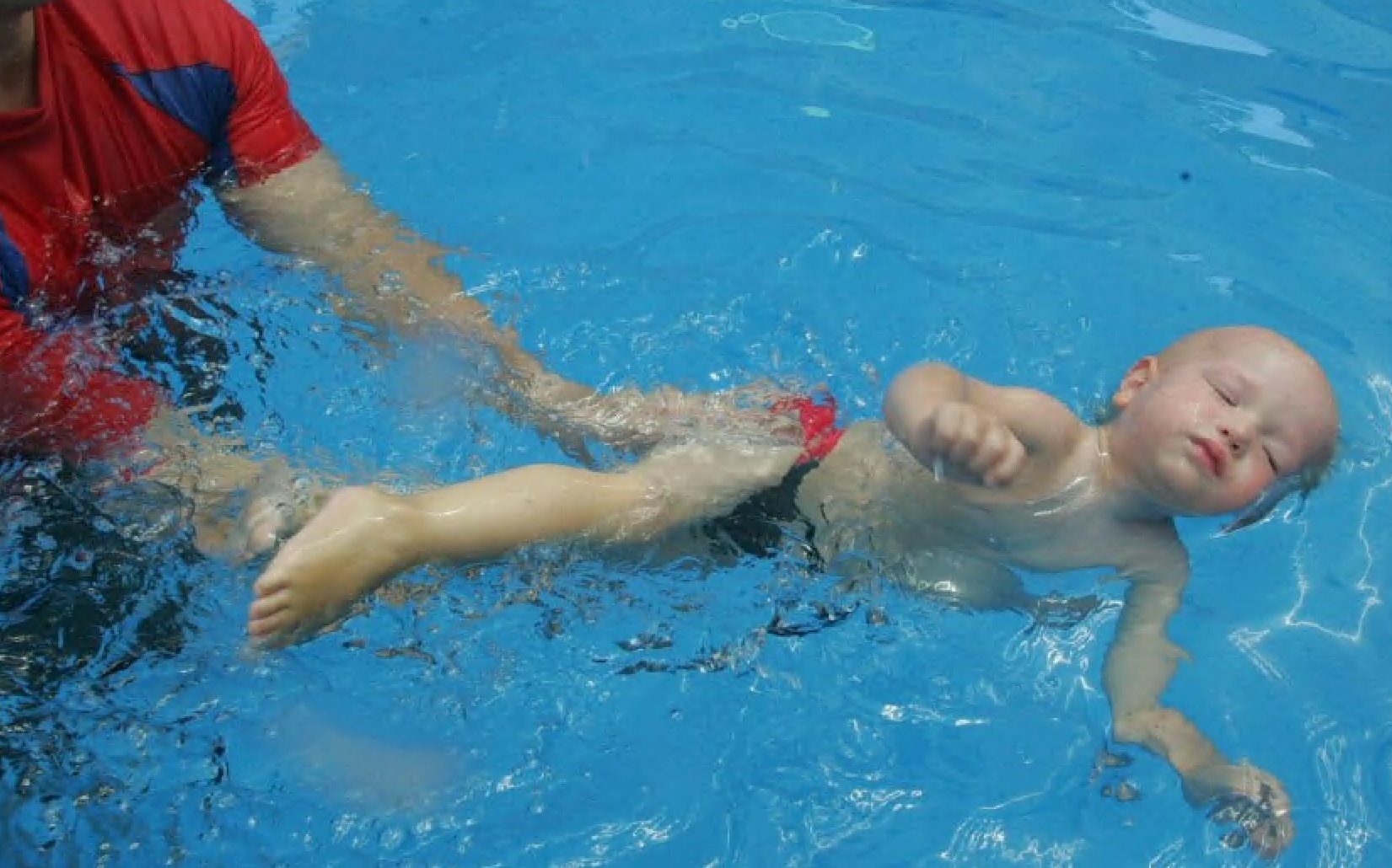
Step 1: Assisted Wall Orientation
Children begin close to the wall with:
One hand touching the pool edge
Face above water
Body positioned at a slight angle
Not directly facing the wall
They must rotate their body to face safety and secure the wall independently.
Each successful grab is reinforced by encouraging the child to hold with two hands, building strength and stability.
Step 2: Increasing Distance and Challenge
As competence improves, difficulty increases gradually:
Child starts further from the wall
Hand may not initially reach the edge
Instructor support is reduced
Child must problem-solve and move toward safety
This progression builds true independence and confidence.
Step 3: Sit-In Entry Practice
Once foundational skills are established, children practise entering the water from a seated position on the pool edge.
This simulates a common real-world scenario — slipping or falling into water from the side.
After entry, the child must:
- Orient themselves
- Turn toward the wall
- Reach and grab securely
- Hold on safely
Why Children Are Taught to Go to the Wall — Not the Instructor
A key principle at KASS is teaching children to rely on environmental safety rather than people.
In a real aquatic emergency:
An adult may not be present
Rescue may take time
Panic can impair judgement
The pool edge may be the only available support
By building an automatic response to seek the wall, children gain a powerful survival advantage.
Turn, Reach, Grab in Drowning Prevention
Many toddler drowning incidents occur after unsupervised access to water. Children often fall in silently and unexpectedly.
Without self-rescue skills, they may:
Panic and remain vertical
Submerge repeatedly
Exhaust quickly
Be unable to maintain breathing
The ability to turn, reach, and hold safety can prevent these outcomes.
Building Real-World Water Competence
True water safety education goes beyond basic swimming ability. Children need skills that work when conditions are uncontrolled and help is not immediate.
Turn, Reach, Grab Safety helps children develop:
Spatial awareness in water
Problem-solving skills
Upper body strength
Breath control
Calm responses to stress
These abilities complement other survival skills such as floating and swim-float-swim techniques.
Survival Swim Lessons for Babies, Toddlers, and Young Children
If you are searching for:
Infant swimming lessons (6 months+)
Toddler swim classes near me
Water safety lessons for young children
Survival swim schools in Australia
Pool safety training for kids
Drowning prevention programs
Kids Aquatic Survival School offers specialised instruction focused on real-world safety outcomes.
Give Your Child Skills That Could Save Their Life
Teaching children to turn, reach, and grab safety empowers them to respond effectively if they ever enter water unexpectedly.
Call: 1800 543 779
Email: [email protected]
Because survival skills are the foundation of true water safety.
#WaterSafety #DrowningPrevention #SurvivalSwim #PoolSafety #FloatToSurvive #KidsAquaticSurvivalSchool
Watch a video showing the survival technique “Turn, Reach & Grab Safety” here